
James McKeen Cattell
Pioneering psychologist; edited Science; opposed WWI draft.
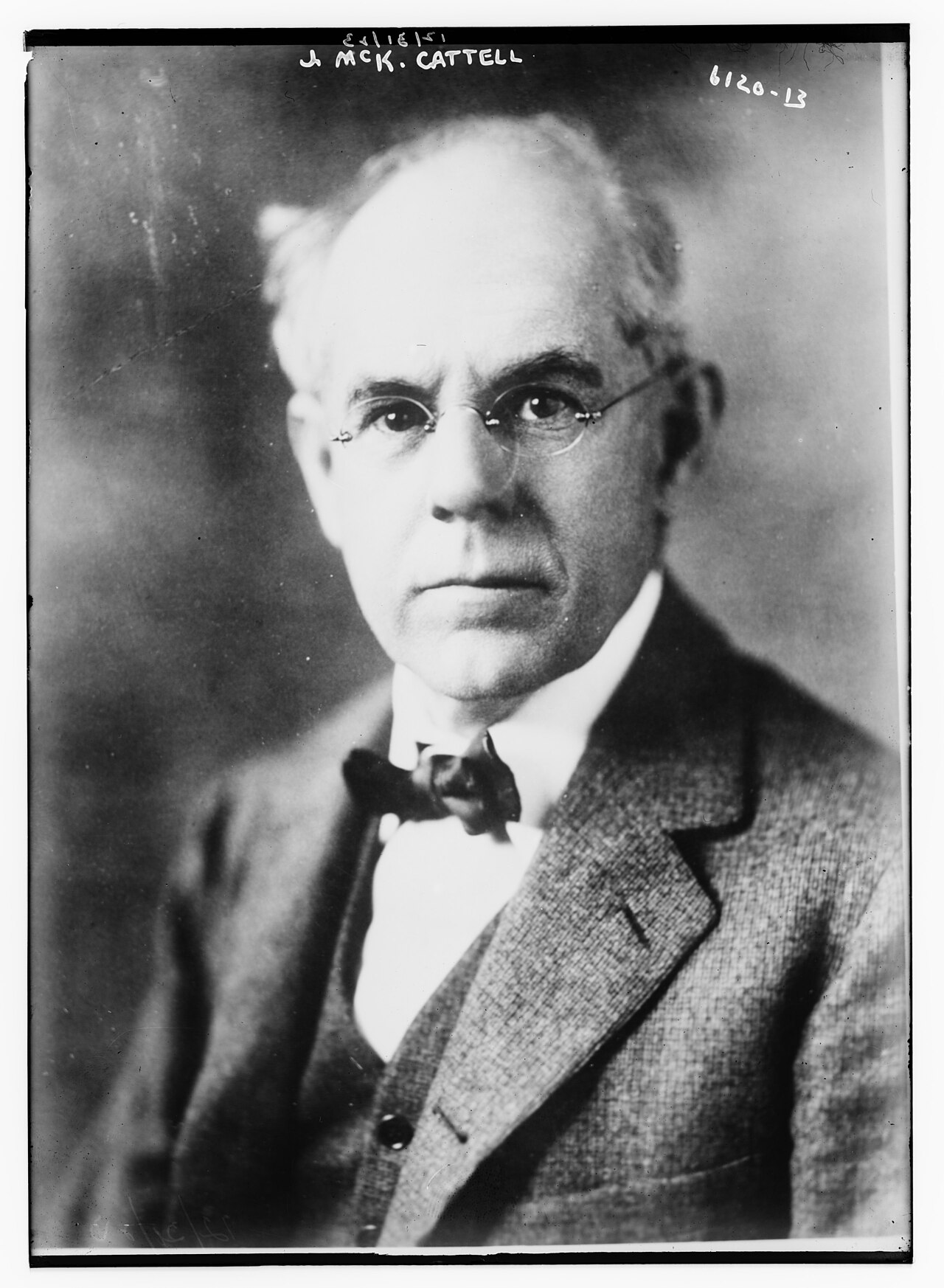
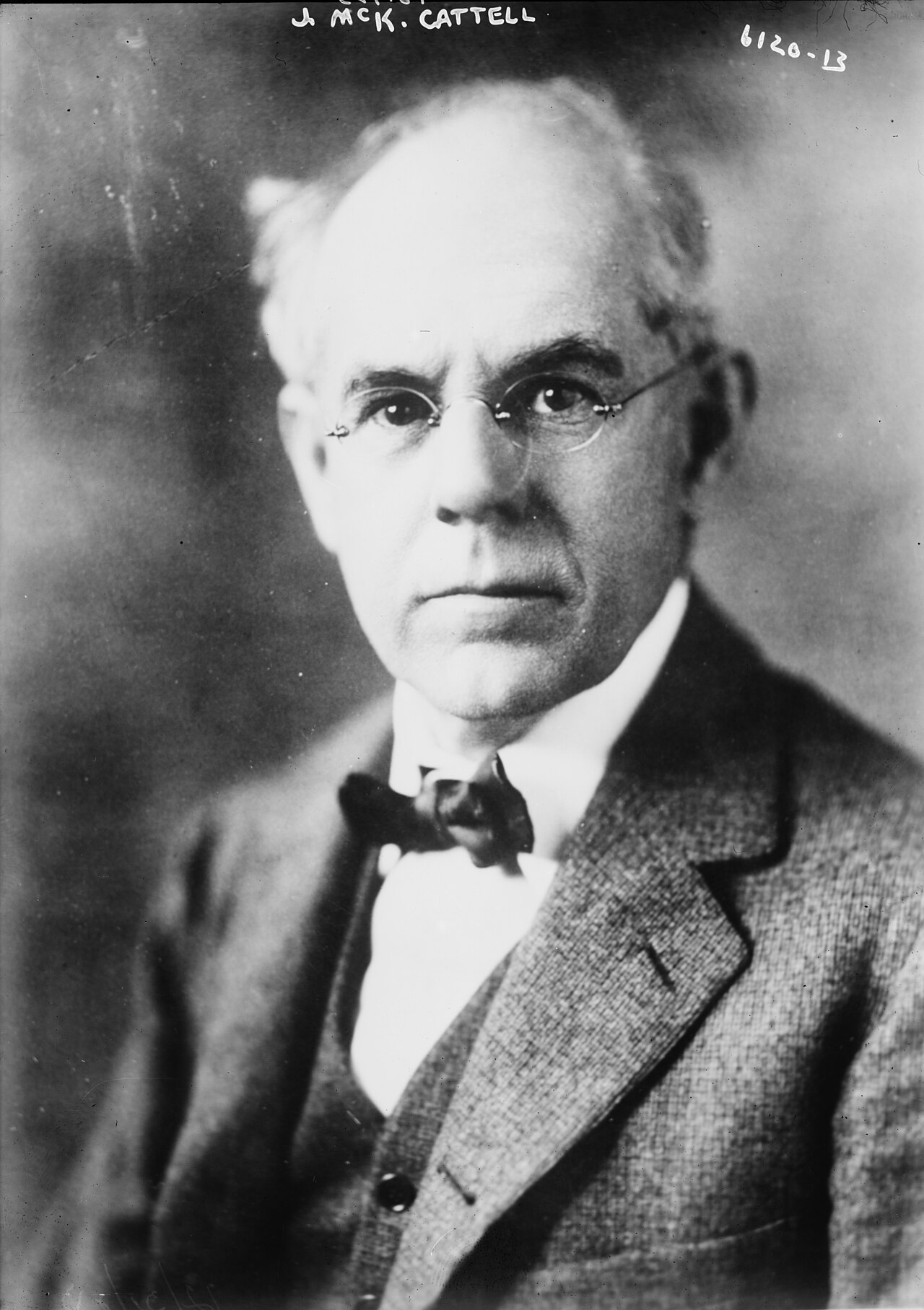
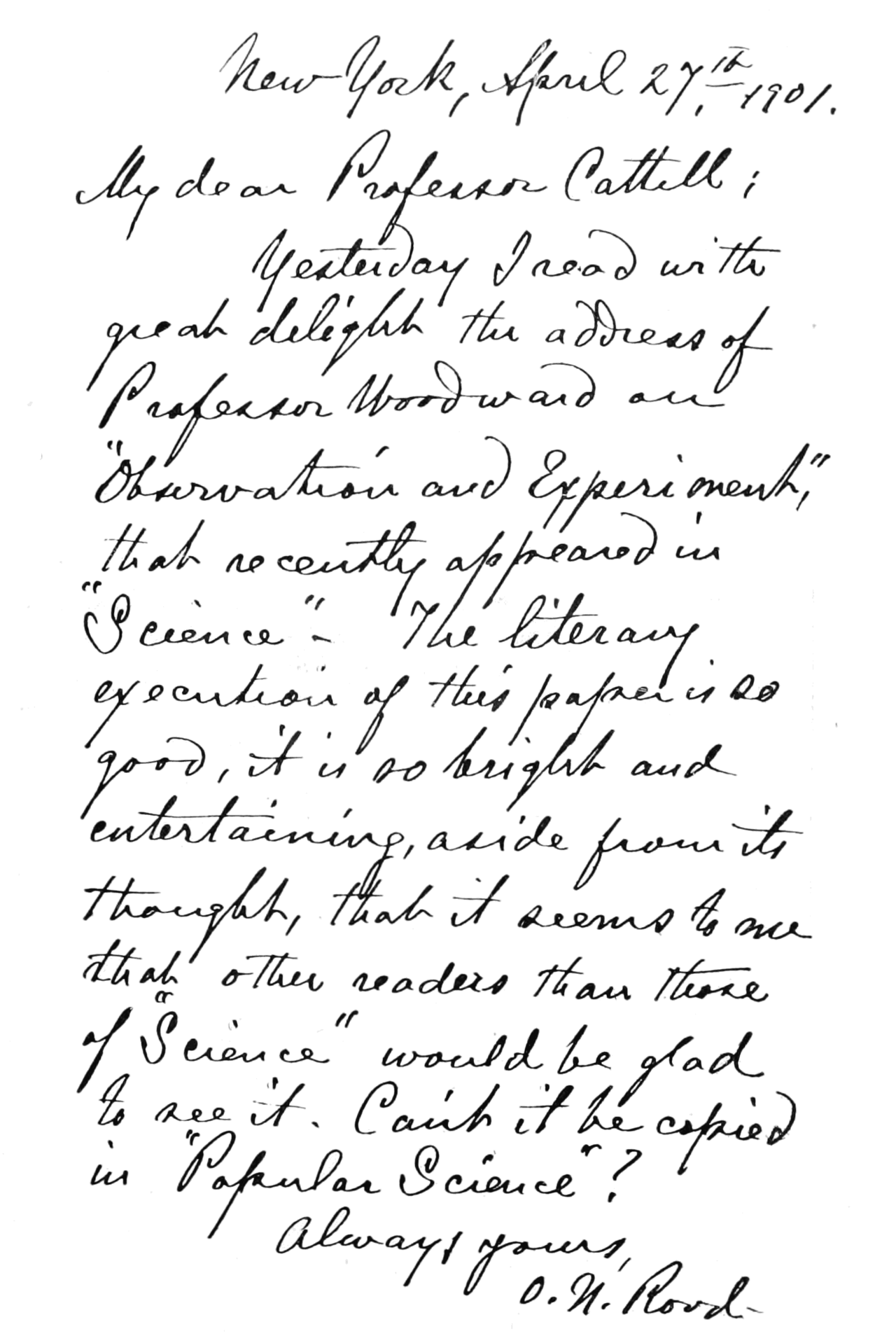
James McKeen Cattell was a pioneering psychologist who helped establish psychology as a legitimate science and was a long-time editor and publisher of scientific journals, including Science. At the time of his death, The New York Times credited him as 'the dean of American science'.
- known_for
- Pioneering mental tests; editing Science; opposition to World War I draft leading to dismissal from Columbia University
Lore & Background
Cattell was born in Easton, Pennsylvania, on May 25, 1860, the eldest child of a wealthy family. His father was a Presbyterian minister who became president of Lafayette College. Cattell entered Lafayette College at age sixteen, graduating with highest honors, and later earned an M.A. there. He found his calling in Germany, studying under Wilhelm Wundt at the University of Leipzig and Hermann Lotze at the University of Göttingen. Under Wundt, Cattell published a dissertation in psychology, titled Psychometrische Untersuchungen (Psychometric Investigation), accepted in 1886, though he was not the first American to do so—G. Stanley Hall preceded him. He once explored his own mind by consuming the then-legal drug hashish.
After completing his Ph.D., Cattell lectured at the University of Cambridge but was not elected a Fellow of St. John's College. He returned to the U.S. in 1889 as a professor at the University of Pennsylvania, then moved to Columbia University in 1891 as department head of psychology, anthropology, and philosophy. In 1917, he was fired from Columbia for opposing U.S. conscription during World War I. He sued and won a financial settlement for breach of contract. He later helped found The Psychological Corporation in 1921 and also created the Science Press Printing Company to produce his journals, continuing editing until his death in 1944.
Reader's Guide
Cattell's significance lies in his role as a pioneer who helped transform psychology from a minor field or pseudoscience into a legitimate academic discipline. He was the first professor of psychology in the United States and introduced mental testing, coining the term 'mental tests' for a battery of measures including reaction time, memory span, and sensation. His research on individual differences, influenced by Wilhelm Wundt and Francis Galton, emphasized experimental methodology. However, his tests were later shown by his student Clark Wissler to have no statistical relationship to academic performance, and they were rendered irrelevant by Alfred Binet's intelligence measurements. Cattell's legacy also includes his extensive work as a journal editor, notably for Science, which he made the official publication of the American Association for the Advancement of Science. His dismissal from Columbia University for opposing the draft led many American universities to establish academic tenure to protect unpopular beliefs. Cattell also held eugenicist beliefs, influenced by Charles Darwin, and offered his children $1,000 if they married the offspring of a university professor.
Did You Know?
- Cattell was a pioneering psychologist who helped establish psychology as a legitimate science, but he was not the first professor of psychology in the United States—that distinction belongs to William James.
- He was fired from Columbia University in 1917 for opposing the draft during World War I, and won a financial settlement for breach of contract.
- Cattell once consumed the then-legal drug hashish and under its influence compared the whistling of a schoolboy to a symphony orchestra.
The Discipline and Its Practitioners
Psychology, the field in which Cattell made his mark, is fundamentally the scientific investigation of the mind and of behavior. Its reach extends across human and nonhuman animals, spanning both the conscious and the unconscious, and touching mental processes like thoughts, feelings, and motives. The discipline straddles the boundary between natural and social sciences, making it inherently interdisciplinary. Those who work within it—psychologists—may also be described as behavioral or cognitive scientists. Some focus on how mental functions shape individual and group behavior, while others dig into the physiological and neurobiological machinery beneath cognition. Biological psychologists, in particular, seek to understand the emergent properties of brains, tying the field closely to neuroscience. As social scientists, psychologists examine the conduct of both individuals and collectives. The discipline's practitioners employ empirical methods to draw causal and correlational inferences among psychosocial variables, though some clinical and counseling psychologists also rely on symbolic interpretation. The field ultimately aspires to benefit society at large.
Naming the Field
The very word Cattell worked within carries a long linguistic history. Psychology draws its first half from the Greek psyche, meaning spirit or soul, and its second half from -logia, signifying study or research. The term first surfaced during the Renaissance in its Latin form, psychiologia, coined by the Croatian humanist Marko Marulić in his treatise on the nature of the human soul, written sometime in the 1510s or 1520s. The earliest known English appearance came in 1694, when Steven Blankaart's Physical Dictionary paired anatomy (the study of the body) with psychology (the study of the soul). The Greek letter psi, the initial of psyche, became the field's recognizable symbol. In 1890, William James offered a definition—psychology as the science of mental life, its phenomena and their conditions—that dominated for decades. That framing was later challenged by John B. Watson in 1913, who insisted psychology should be a purely objective experimental natural science aimed at predicting and controlling behavior. Since James's era, the term has carried a stronger implication of scientific experimentation, distinguishing professional understanding from the folk psychology of everyday people.
Philosophical Ancestors
Long before psychology became a modern academic discipline, the questions it asks were being wrestled with in ancient civilizations. In Egypt, the Ebers Papyrus already referenced depression and thought disorders. Greek thinkers—Thales, Plato, Aristotle—grappled with the workings of the mind, with Aristotle's De Anima remaining a landmark. Hippocrates, writing in the fourth century BCE, proposed that mental disorders had physical rather than supernatural origins. Plato placed mental processes in the brain around 387 BCE, while Aristotle, a few decades later, pointed to the heart. In China, the philosophical traditions of Laozi, Confucius, and Buddhism contributed insights drawn from introspection, observation, and focused thinking. The Yellow Emperor's Classic of Internal Medicine identified the brain as the nexus of wisdom and sensation and theorized personality in terms of yin-yang balance. Indian philosophy, shaped by Hinduism and Buddhism, explored distinctions between the transient self and the eternal soul, with yoga offering techniques for reaching higher awareness. These ancient streams collectively fed the intellectual river into which modern psychology, and figures like Cattell, eventually poured.
The Breadth of Inquiry
Psychology, the field Cattell helped shape, is remarkably wide in scope. Its researchers investigate perception, cognition, attention, emotion, intelligence, subjective experience, motivation, brain functioning, and personality. Their interests extend into interpersonal relationships, psychological resilience, family resilience, and the unconscious mind. Beyond the laboratory, psychologists apply their knowledge to the assessment and treatment of mental health problems and to solving practical problems across many spheres of human activity. Some practice psychotherapy in clinical, counseling, or school settings. Others conduct scientific research in universities, medical schools, or hospitals. Still others work in industrial and organizational contexts, or in areas touching human development, aging, sports, health, forensic science, education, and the media. The discipline thus occupies a uniquely cross-cutting position: it is at once a natural science concerned with the brain and a social science concerned with the conduct of individuals and groups. By many accounts, its ultimate aim is to benefit society, a goal that unites its diverse practitioners from the clinic to the boardroom.
Gallery
Frequently Asked Questions
Who is James McKeen Cattell?
James McKeen Cattell was a pioneering American psychologist who played a major role in establishing psychology as a recognized scientific discipline. He is also widely remembered as a long-serving editor and publisher of major scientific journals.
What is James McKeen Cattell most known for?
Cattell is best known for his early work developing mental tests that measured individual differences, as well as for his decades-long editorial leadership of the journal Science. His contributions helped shape both experimental psychology and the infrastructure of American scientific communication.
What role did Cattell play in scientific publishing?
He served as a long-time editor and publisher of scientific journals, most notably Science, where he helped set standards for peer-reviewed research communication. His editorial work made him a central figure in how American science was disseminated to the public and to other researchers.
Why was Cattell dismissed from Columbia University?
Cattell was fired from his position at Columbia University because he publicly opposed the World War I draft. His stance on conscription conflicted with the institution's expectations, leading to his removal despite his long tenure there.
How is Cattell remembered in the field of psychology?
He is regarded as a foundational figure who helped legitimize psychology as a rigorous science during its early years. At the time of his death, The New York Times honored him with the title 'the dean of American science,' reflecting the breadth of his influence beyond psychology alone.
More in Psychologists And Psychiatrists 25-29
Elsewhere in the Psychologists And Psychiatrists universe
Spotted an error? Know more?
This is a living reference — every entry is fact-audited, and reader corrections feed straight into our audit queue. Suggest an edit · See this site's audit record