
Donald Winnicott
English paediatrician and psychoanalyst known for transitional objects.
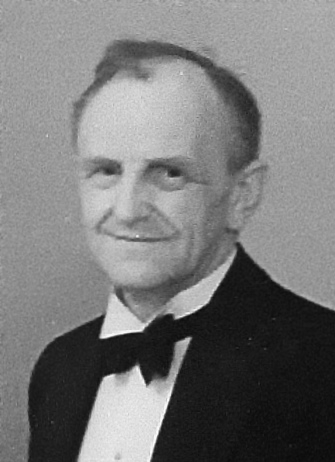
Donald Woods Winnicott was an English paediatrician and psychoanalyst influential in object relations theory and developmental psychology. He was a leading member of the British Independent Group of the British Psychoanalytical Society, served twice as its President, and was a close associate of writer and psychoanalyst Marion Milner. He is best known for his concepts of the true self and false self, the 'good enough' parent, and the transitional object.
- born
- 7 April 1896, Plymouth, Devon, England
- died
- 25 January 1971, London, England
- field
- Paediatrics, psychoanalysis
- nationality
- English
- known_for
- True self and false self, 'good enough' parent, transitional object, holding environment
Lore & Background
Winnicott was born in Plymouth to Sir John Frederick Winnicott and Elizabeth Martha. His family were staunch, civic-minded Methodists. He described himself as a disturbed adolescent, reacting against his own self-restraining 'goodness' acquired from trying to assuage the dark moods of his mother. He studied at The Leys School, then Jesus College, Cambridge, and later at St Bartholomew's Hospital Medical College. During World War I, he served as a medical officer on a destroyer. He completed his medical studies in 1920. In 1923, he married artist Alice Buxton Winnicott and obtained a post as physician at Paddington Green Children's Hospital, where he worked for 40 years. He began a ten-year psychoanalysis with James Strachey in 1923 and later a second analysis with Joan Riviere in 1936. During the Second World War, he served as consultant paediatrician to the children's evacuation programme, where he met and worked with Clare Britton, a psychiatric social worker who became his second wife and chief professional collaborator. He divorced his first wife in 1949 and married Clare in 1951. He gave over sixty talks on the BBC radio between 1943 and 1966. He died on 25 January 1971 following a series of heart attacks.
Reader's Guide
Winnicott's significance lies in his integration of paediatric observation with psychoanalytic theory, particularly through concepts such as the holding environment, transitional objects, and the true and false self. His notion of the 'good enough' parent shifted focus from perfect care to ordinary, devoted care as foundational for healthy development. The transitional object, introduced in his 1951 paper, became a cornerstone for understanding how children navigate between inner and outer reality, influencing developmental psychology and cultural theory. His work on the holding environment extended from mother-infant bonding to the broader contexts of family, school, and psychotherapy, where the therapist offers a substitute holding environment. His theoretical writings emphasized empathy and the particular transactions between imperfect people. He was a leading member of the British Independent Group and influenced contemporaries such as R. D. Laing. His posthumous publications, overseen by Clare Winnicott, continued to shape psychoanalytic thought.
Did You Know?
- Winnicott first thought of studying medicine after fracturing his clavicle at The Leys School.
- He served as a medical officer on a destroyer during World War I.
- He gave over sixty talks on BBC radio between 1943 and 1966.
- His first book was published in 1931, and several other works appeared before 1944.
Early Life and the Making of a Healer
Winnicott was born in Plymouth, Devon, in April 1896, into a prosperous Methodist household. His father, Sir John, was a hardware merchant who served twice as mayor of Plymouth and received a knighthood in 1924. His mother, Elizabeth Martha, came from a chemist's family. Behind the family's civic respectability, young Donald felt emotionally oppressed—by his mother's recurring depression, his two sisters, and a nanny. He later framed his childhood as an effort to keep his mother "alive." His father, an enterprising freethinker, encouraged his son's creativity. Winnicott remembered himself as a disturbed adolescent, pushing back against the self-restraining "goodness" he had cultivated to ease his mother's moods. His call toward medicine emerged at The Leys School in Cambridge, where a fractured clavicle led him to wish he could heal himself. He entered pre-clinical studies at Jesus College in 1914, but the First World War interrupted his education; he served as a medical officer on the destroyer HMS Lucifer. After graduating with a third-class degree, he trained in clinical medicine at St Bartholomew's Hospital Medical College in London, where a mentor instilled in him the discipline of listening carefully to patients—a habit he would later identify as the bedrock of his psychoanalytic work.
A Career Forged in Conflict and Collaboration
Winnicott completed his medical training in 1920 and, in 1923, took up a post as physician at Paddington Green Children's Hospital in London—a position he would hold for four decades. That same year he married the potter Alice Buxton, whose severe psychological difficulties led him to arrange therapy for both of them. He also began a ten-year analysis with James Strachey in 1923 and started his training as an analytic candidate in 1927; a second analysis with Joan Riviere followed in 1936. His rise to prominence coincided with the bitter Controversial Discussions within the British psychoanalytic movement, where followers of Anna Freud and Melanie Klein clashed over intellectual legacy. The wartime compromise produced three factions, and Winnicott became a leading voice in the Independent Group alongside Ronald Fairbairn, Michael Balint, John Bowlby, and Marion Milner. During the Second World War he served as consultant paediatrician to the children's evacuation programme, where he met the psychiatric social worker Clare Britton. After the war, he delivered over sixty BBC radio talks between 1943 and 1966, his first series titled "Happy Children." His private practice also attracted figures such as R. D. Laing, who wrote to Winnicott in 1958 acknowledging his influence.
Theoretical Contributions That Reshaped Child Psychology
Winnicott's clinical work with mothers and infants at Paddington Green gave rise to several ideas that became cornerstones of object relations theory and developmental psychology. His concept of the "holding environment" grew from observing how a mother's attentive physical care—holding, bathing, feeding—shaped a baby's earliest sense of the world and of another person. He argued that the foundations of health were laid by the "ordinary devoted mother" in her everyday loving care, a notion he crystallized in his idea of the "good enough" parent. Equally influential were his explorations of the true self and the false self, and the concept of the transitional object, which he developed in close collaboration with his second wife, Clare Britton. Winnicott was a remarkably prolific writer, producing more than two hundred papers and several books, including Clinical Notes on Disorders of Childhood (1931), The Ordinary Devoted Mother and Her Baby (1949), The Child and the Family (1957), and Playing and Reality (1971). With the exception of that early 1931 volume, all his books appeared after 1944, and Clare oversaw the posthumous release of additional works, including Holding and Interpretation (1986).
Personal Life, Partnership, and Lasting Legacy
Winnicott's personal life was marked by two marriages that profoundly shaped his professional trajectory. His first wife, Alice Buxton, was a potter with severe psychological difficulties; he arranged therapy for both of them, and they divorced in 1949. In 1951 he married Clare Britton, the psychiatric social worker he had met during the wartime evacuation programme. Clare was a keen observer of children and a psychoanalyst in her own right, and she became what is arguably his chief professional collaborator. She influenced the development of his theories and likely served as the midwife to his prolific publications. Winnicott served twice as President of the British Psychoanalytical Society, in 1956–1959 and 1965–1968, and was a close associate of the writer and psychoanalyst Marion Milner. He died on 25 January 1971 in London, following a series of heart attacks, and was cremated. Clare oversaw the posthumous publication of several of his works, ensuring that his ideas continued to reach new audiences long after his passing.
Gallery

Frequently Asked Questions
Who is Donald Winnicott?
Donald Woods Winnicott (1896–1971) was an English paediatrician turned psychoanalyst who became a central figure in object relations theory and developmental psychology. He is widely regarded as one of the most original thinkers in post-Freudian psychoanalysis.
What are Donald Winnicott's most famous concepts?
He is best known for articulating the distinction between the true self and the false self, the idea of the 'good enough' parent, and the notion of the transitional object (such as a child's comfort blanket). He also developed the concept of the holding environment as essential for healthy infant development.
What was Donald Winnicott's role in the British Psychoanalytical Society?
Winnicott was a leading voice within the British Independent Group of the British Psychoanalytical Society and served as its President on two separate occasions. He was also a close professional associate of the psychoanalyst and writer Marion Milner.
What does the 'good enough parent' mean in Winnicott's theory?
The concept holds that a parent does not need to be flawless; instead, consistently responsive caregiving that is merely 'good enough' allows the child to build a secure sense of self. Winnicott argued that striving for perfection could actually hinder a child's emotional growth.
When and where was Donald Winnicott born, and when did he die?
He was born on 7 April 1896 in Plymouth, Devon, England, and died in London on 25 January 1971. His professional life spanned both clinical paediatrics and psychoanalytic practice before his passing.
More in Psychologists And Psychiatrists 1-24
Elsewhere in the Psychologists And Psychiatrists universe
Spotted an error? Know more?
This is a living reference — every entry is fact-audited, and reader corrections feed straight into our audit queue. Suggest an edit · See this site's audit record