
Edward B. Titchener
English psychologist who founded structuralism and trained the first woman in the United States to earn a PhD in psychology.
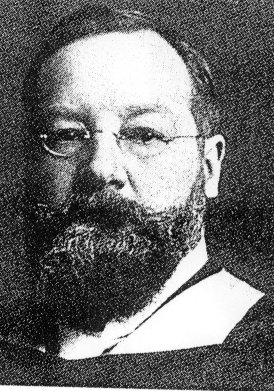
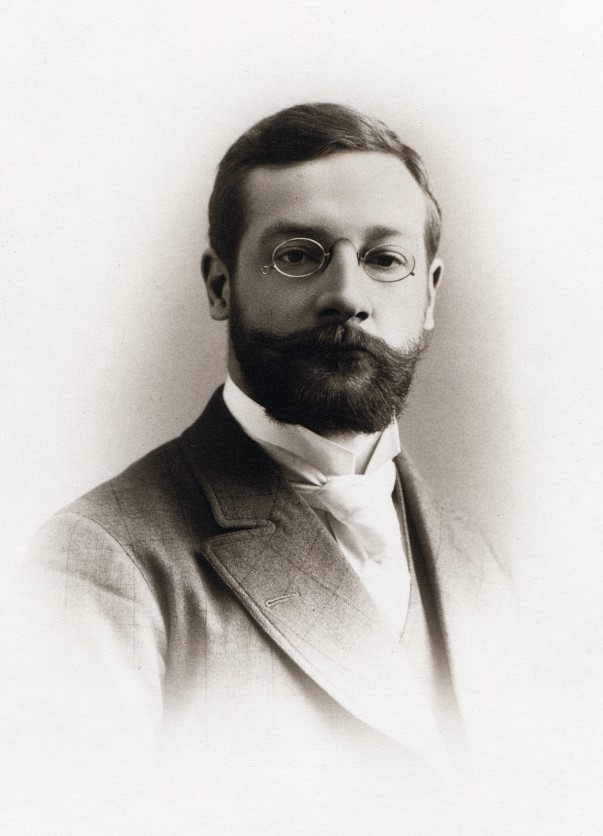
Edward Bradford Titchener (11 January 1867 – 3 August 1927) was an English psychologist who studied under Wilhelm Wundt and is best known for creating structuralism, a version of psychology that described the structure of the mind. After becoming a professor at Cornell University, he established the largest doctoral program in the United States at that time, and his first doctoral student, Margaret Floy Washburn, became the first woman in the United States to receive a PhD in psychology in 1894.
- born
- 11 January 1867
- died
- 3 August 1927
- field
- Psychology
- nationality
- English
- known_for
- Structuralism, introspection method, largest US doctoral program of his time
Lore & Background
Titchener was born to Alice Field Habin and John Titchener, who eloped in 1869; his mother was disowned by her family. His father worked as a clerk or in accountancy before dying of tuberculosis in 1879. The family moved at least ten times, and at age nine Titchener was sent to live with his paternal grandparents. His grandfather, a successful solicitor and ex-mayor of Chichester, funded his early education, but after the grandfather's investments collapsed in 1881 and he died, Titchener's subsequent schooling was supported by scholarships, paid employment, and entrepreneurial activities.
Titchener attended The Prebendal School and Malvern College, then Brasenose College, Oxford, from 1885 to 1890, earning a rare 'double first' BA in classics in 1889. At Oxford he began reading Wilhelm Wundt's works and translated the first volume of the third edition of Wundt's Principles of Physiological Psychology. He spent an extra year at Oxford with physiologist John Scott Burdon-Sanderson, then studied under Wundt in Leipzig from autumn 1890, completing his doctorate in 1892 on binocular vision. In autumn 1892 he joined Cornell University's Sage School of Philosophy as an untenured lecturer, later gaining tenure and a full professorship in 1895.
Titchener married Sophie Bedloe Kellogg, a public school teacher from Maine, in 1894; they had four children. He supported his mother financially for the rest of his life; his sisters had lived in difficult circumstances after their father's death, including time in an orphanage and domestic service. Titchener's structuralism classified mental structures like a chemist breaks down chemicals, with sensations having four properties: intensity, quality, duration, and extent. His introspection method required trained observers to report raw sensory characteristics without naming objects, a practice he called stimulus error.
Reader's Guide
Titchener's significance lies in his founding of structuralism, which aimed to map the basic components of consciousness through rigorous introspection. He created the largest doctoral program in the United States at that time at Cornell, training Margaret Floy Washburn as the first woman to earn a PhD in psychology. His detailed manuals, such as Experimental Psychology: A Manual of Laboratory Practice, emphasized a scientific approach and systematic measurement, drawing on Gustav Fechner's psychophysics. However, structuralism did not survive his death; modern reflections suggest its narrow scope and strict methodology, heavily dependent on Titchener's personal direction, contributed to its decline. His law of prior entry—that attended objects reach consciousness more quickly—has received ongoing research interest, with recent brain imaging studies supporting the idea that attention can speed up perceptual brain activation.
Did You Know?
- Titchener's first doctoral student, Margaret Floy Washburn, became the first woman in the United States to receive a PhD in psychology in 1894.
- He translated the first volume of the third edition of Wilhelm Wundt's Principles of Physiological Psychology from German into English while at Oxford.
- Titchener's introspection method instructed subjects not to report the name of an object (e.g., 'pencil') but only its raw sensory characteristics, calling the naming error 'stimulus error'.
- His law of prior entry states that 'the object of attention comes to consciousness more quickly than the objects which we are not attending to.'
Gallery
Frequently Asked Questions
Who is Edward B. Titchener?
Edward Bradford Titchener (1867–1927) was an English-born psychologist who trained under Wilhelm Wundt and went on to build one of the most influential academic programs in American psychology at Cornell University.
What is Edward B. Titchener's main contribution to psychology?
He is credited with founding structuralism, an approach that sought to break conscious experience down into its basic components, and he championed the introspection method as a tool for mapping the mind's architecture.
Who was Edward B. Titchener's first doctoral student?
Margaret Floy Washburn earned her PhD under Titchener in 1894, making her the first woman in the United States to hold a doctorate in psychology.
Where did Edward B. Titchener teach and what was his program like?
After joining Cornell University, he built what was then the largest doctoral program in the country, training a whole generation of American psychologists within his structuralist framework.
Why do fans and students still discuss Edward B. Titchener?
Even though structuralism eventually gave way to functionalism and other schools, Titchener's push for rigorous experimental methods and his role in establishing serious graduate training in U.S. psychology left a lasting mark on the field.
More in Psychologists And Psychiatrists 1-24
Elsewhere in the Psychologists And Psychiatrists universe
Spotted an error? Know more?
This is a living reference — every entry is fact-audited, and reader corrections feed straight into our audit queue. Suggest an edit · See this site's audit record